Posts

पृथ्वीश उवाच - Prithwis said

As a prolific user of Twitter, I have more than 11K tweets on my timeline but I realised that in most cases I have either retweeted others' tweets or at best forwarded or commented upon the contents of various websites. How many times have I said anything original? Actually not a trivial number! I have nearly 4000 original "words of wisdom" that I hereby bequeath to posterity! How did I arrive at this list? Well I downloaded all my Tweets till 5 March 2016 into a spreadsheet and then using some simple text processing commands, I eliminated retweets and any tweets that contained a reference to any URL. Unfortunately that eliminated tweets referring to my own work as well but that was the price I had to pay to create this. Finally, here it is ... a collection of my pure and original thoughts from the last seven years!

Smartcontracts : Cryptocurrency : Blockchain

Image
Rise of the digital autonomous corporation Think of a company that offers a service that helps people track their assets and transfer the same to others on the basis of validated instructions -- similar to a current account with cheque facility. Think of the same company as hiring people to do this and paying them for their effort with shares in the company -- sweat equity. Think of this company as being in operation since 2009 and the value of its shares spiking to US$ 1200 before stabilising at around US$ 200 over the past two years. Think of this company having a current market capitalisation of around US$ 5.5 billion. Now what if this company were to have to no human managers and but only programs on multiple computers interacting with each other!  Is such an unmanaged company possible? Strangely enough, it is possible, it does exist today and it is called Bitcoin. The only twist in the the tale is that the only asset being tracked by the company also happens to be the sh...

Auditors, not Regulators, necessary for Higher Education

Image
India has a glorious tradition in higher education that stretches back to the hoary antiquity of Nalanda and Takshila but today this tradition is under stress. We have too few colleges for our kids and most of these lack the infrastructure (“hardware”) or the faculty (“wetware”) necessary to deliver the kind of programs (“software”) necessary to be world class institutions. In an earlier article we had explored how inexpensive technology could address this problem and here we explore structural issues that may offer useful alternatives. image indolinkenglish There are different kinds of reasons why we do not have enough good colleges. In the case of government, or public-sector, colleges it is a combination of lack of money, mismanagement and political interference. Central universities and institutions are better off but they too are plagued by cronyism and inefficient use of money. Instead of creating multiple IITs and IIMs in far flung parts of the country we should have incre...

Re-Imagineering MBA education in India

Image
Management education in India is in crisis. Enrollment is falling as students realise that jobs for freshly minted MBAs are nowhere as abundant or glitzy as they used to be in the past. MBAs still get recruited because earlier batches of MBAs are in middle management positions and they need more of their type to keep their own brand value high but in the upper echelons of corporate India their presence is rare. Finally hordes of B-schools, all trying to model themselves as third cousins of IIM Ahmedabad, and handing out PGDBMs by the hundreds have reduced the value of the certificate to the level of a B.A. or B.Com. degree. Necessary but not sufficient for low paying, white collar “executive” jobs so beloved of middle-class India. But management skills is really, really what India needs. There is no dearth of high technology in the corridors of organisations like TCS, L&T, ISRO, SBI, Mahindra, NTPC, ONGC, DRDO and yet we somehow cannot bring it all together in a manner that can ...

Bitcoin, Blockchain and the Crypto Corporation

If 2013 was the year of Bitcoin, the enigmatic crypto-currency created by the anonymous Satoshi Nakamoto, then 2016 is going to be year of the BlockChain -- the shared public ledger technology that provides the platform on which Bitcoin works. In fact, Bitcoin is just ONE of the many applications that can be built on the blockchain and this fact is gradually dawning on the world of technology as different groups are racing to create new products. While many strange and wonderful products like an automatic Uber-like car service have been proposed, the most powerful applications seem to be coming out of Wall Street. This is because of two reasons The fundamental premise behind the blockchain is control and transfer of assets and this is what Wall Street does for a living Wall Street has realised that rather than resisting the arrival of a disruptive technology it is better adopt it first. Resistance is futile. Just as retailers who ignored the eCommerce revolution got wiped out by ...

Android as an IOT platform

Image
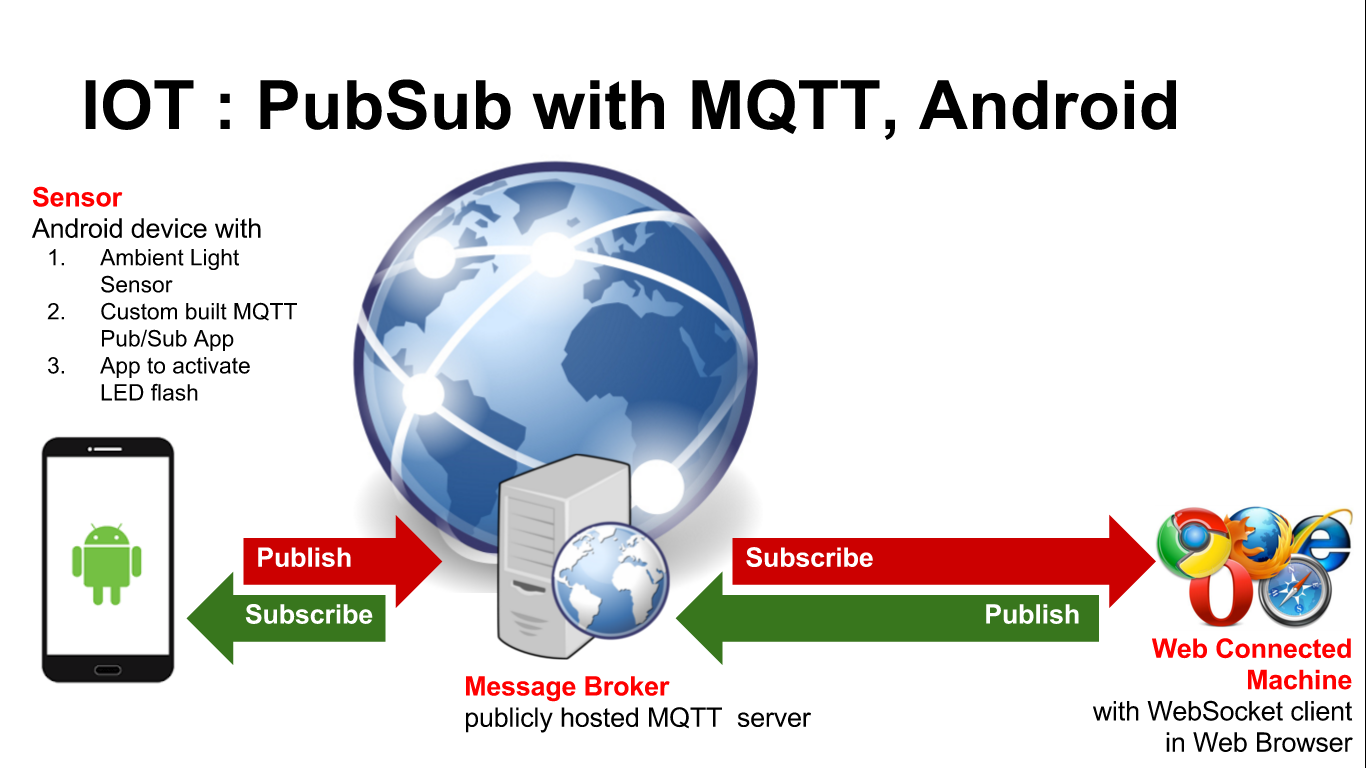
The term “platform” is very ambiguous when used carelessly by programmers and consultants in the information technology business. Under various circumstances, TCP/IP, Linux, Oracle and Java are all referred to as platforms even though they are neither similar nor comparable to each other. Even within the narrower definition of IOT we can look at platforms from at least three directions. First,  we have hardware based platforms like Qualcomm’s AllJoyn , Intel’s IOTivity , Apple’s Homekit  and Android/Brillo from Google. Second, we have different data transport protocols like XMPP - used in Internet Messaging (IM), MQTT - a publish / subscribe model for messages, DDS - another pub/sub model for data distribution services and AMQP - Advanced Message Queuing Protocol. Finally we have integrated, cloud based platforms from big and small companies like IBM Bluemix, Carriots, n.io, thethings.io, thingworx and many others that claim to provide end-to-end solutions to transfer in...

Building the World Wide (mind)Web

The Advaita-Vedanta School of Indian philosophy posits that every sentient mind is interconnected as a part of a universal consciousness. Mapped into modern technology, this could be viewed as the biological equivalent of the World Wide Web consisting of computers connected over the internet. The web that we see today had its genesis with the Ethernet, invented in 1973 and TCP/IP adopted in 1983. How far away are we from a similar network of minds? Controlling machines with thought is the first step and Craig Thomas’ 1982 sci-fi novel, Firefox, was the first to predict thought-controlled aircraft. In just about 30 years since then, technology has progressed to the point where we have thought controlled-wheelchairs, not in research labs, but as a do-it-yourself project at Instructables ! In fact, this technology has now reached the consumer level and companies like Emotiv sell headsets that pick up electrical signals from the brain and work as an input device, similar to joystick ...