Posts

Re-Imagineering MBA education in India

Image
Management education in India is in crisis. Enrollment is falling as students realise that jobs for freshly minted MBAs are nowhere as abundant or glitzy as they used to be in the past. MBAs still get recruited because earlier batches of MBAs are in middle management positions and they need more of their type to keep their own brand value high but in the upper echelons of corporate India their presence is rare. Finally hordes of B-schools, all trying to model themselves as third cousins of IIM Ahmedabad, and handing out PGDBMs by the hundreds have reduced the value of the certificate to the level of a B.A. or B.Com. degree. Necessary but not sufficient for low paying, white collar “executive” jobs so beloved of middle-class India. But management skills is really, really what India needs. There is no dearth of high technology in the corridors of organisations like TCS, L&T, ISRO, SBI, Mahindra, NTPC, ONGC, DRDO and yet we somehow cannot bring it all together in a manner that can ...
Bitcoin, Blockchain and the Crypto Corporation

If 2013 was the year of Bitcoin, the enigmatic crypto-currency created by the anonymous Satoshi Nakamoto, then 2016 is going to be year of the BlockChain -- the shared public ledger technology that provides the platform on which Bitcoin works. In fact, Bitcoin is just ONE of the many applications that can be built on the blockchain and this fact is gradually dawning on the world of technology as different groups are racing to create new products. While many strange and wonderful products like an automatic Uber-like car service have been proposed, the most powerful applications seem to be coming out of Wall Street. This is because of two reasons The fundamental premise behind the blockchain is control and transfer of assets and this is what Wall Street does for a living Wall Street has realised that rather than resisting the arrival of a disruptive technology it is better adopt it first. Resistance is futile. Just as retailers who ignored the eCommerce revolution got wiped out by ...

Android as an IOT platform

Image
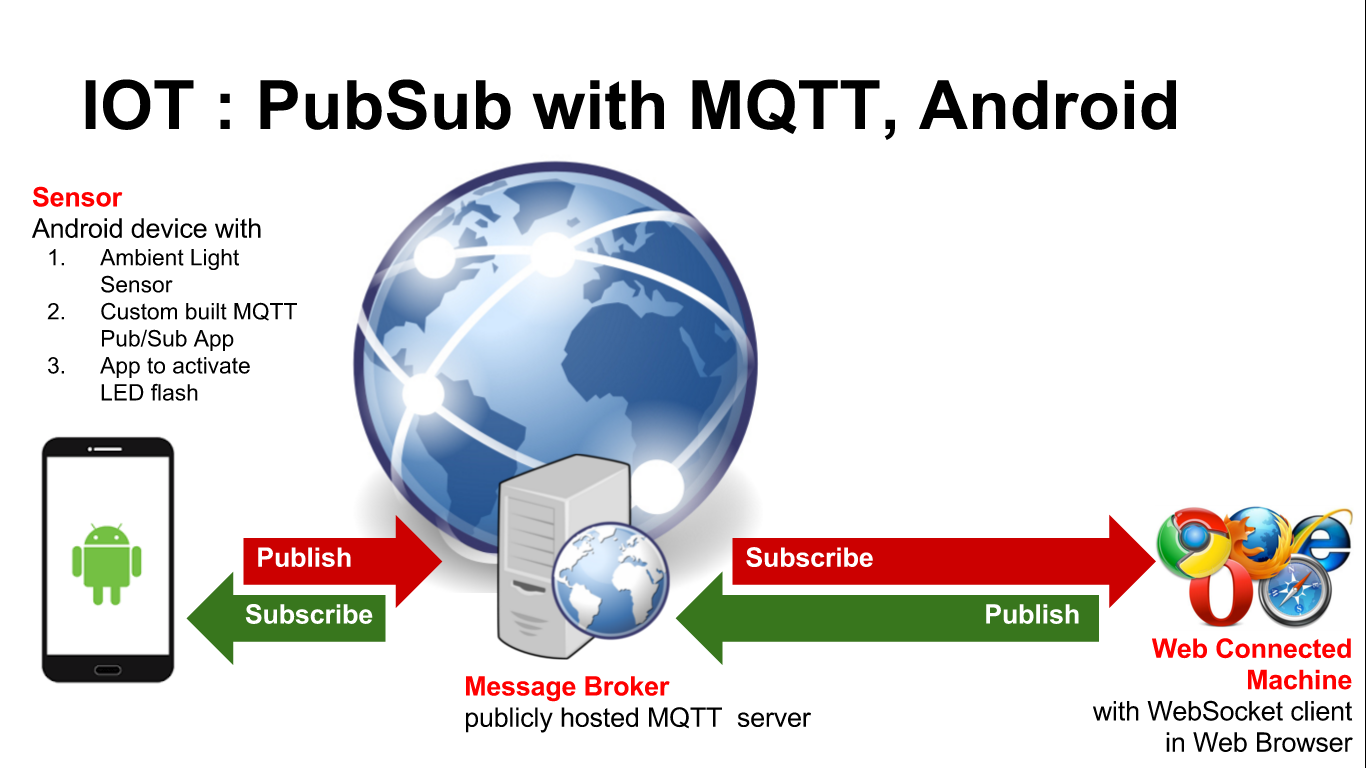
The term “platform” is very ambiguous when used carelessly by programmers and consultants in the information technology business. Under various circumstances, TCP/IP, Linux, Oracle and Java are all referred to as platforms even though they are neither similar nor comparable to each other. Even within the narrower definition of IOT we can look at platforms from at least three directions. First,  we have hardware based platforms like Qualcomm’s AllJoyn , Intel’s IOTivity , Apple’s Homekit  and Android/Brillo from Google. Second, we have different data transport protocols like XMPP - used in Internet Messaging (IM), MQTT - a publish / subscribe model for messages, DDS - another pub/sub model for data distribution services and AMQP - Advanced Message Queuing Protocol. Finally we have integrated, cloud based platforms from big and small companies like IBM Bluemix, Carriots, n.io, thethings.io, thingworx and many others that claim to provide end-to-end solutions to transfer in...

Building the World Wide (mind)Web

The Advaita-Vedanta School of Indian philosophy posits that every sentient mind is interconnected as a part of a universal consciousness. Mapped into modern technology, this could be viewed as the biological equivalent of the World Wide Web consisting of computers connected over the internet. The web that we see today had its genesis with the Ethernet, invented in 1973 and TCP/IP adopted in 1983. How far away are we from a similar network of minds? Controlling machines with thought is the first step and Craig Thomas’ 1982 sci-fi novel, Firefox, was the first to predict thought-controlled aircraft. In just about 30 years since then, technology has progressed to the point where we have thought controlled-wheelchairs, not in research labs, but as a do-it-yourself project at Instructables ! In fact, this technology has now reached the consumer level and companies like Emotiv sell headsets that pick up electrical signals from the brain and work as an input device, similar to joystick ...

The Ruins of Angkor - 4 - Phnom Kulen to Tonle Sap

Image
North of the ruins of Angkor Wat, that we have described in previous posts [ 1 ], [ 2 ], [ 3 ] is the relatively small mountain range, Phnom Kulen [ the "Mountain of Lychees"] that most visitors give a miss to because there are no ruins of any massive temple that the Angkor civilisation is famous for. But for the rulers of Cambodia, these mountains were very significant. Jayavarman II, the first powerful king and the de facto founder of the Angkor dynasty, announced his ascendancy to the throne and the assumption of the title, Chakravartin -- the Supreme Ruler as per Indian / Hindu traditions -- from the top of this mountain in the 8th century and even the communist Pol Pot regime, that virtually destroyed the country in the closing years of the 20th century held on to these mountains as their last redoubt before they were ejected by the invading Vietnamese army. Why are the Kulen Mountains so important ? If you go back to the early years of the first millennium, yes, so...

The Ruins of Angkor - 3 - Angkor Thom

Image
Angkor Wat, that we have described in the previous post , was primarily a temple complex measuring 1.2 km x 1.2 km. Angkor Thom on the other hand, was a city, the capital city of the Angkor empire with a walled area of approximately 3 km x 3 km.  This city was built in the 12th century by Suryavarman VII and his successors who lived there till the eventual collapse of the Angkor empire. As a city it had multiple palaces, numerous temples and many other structures. Like all Angkor structures, Angkor Thom is surrounded by a moat, walls and four gates (plus one funeral gate for dead bodies) This is where we enter the city through the South Gate. [ Please click on the images to enlarge them] These large faces are characteristic of Angkor Thom The moat is crossed over a causeway that has a row of Gods on one side and a row of Demons, Asuras, on the other At the centre of the city is the temple of Bayon, that is a similar to Angkor Wat but smaller. A...